
Press Article
Early Verification Strategy: Why Testing in Product Development Must Start at Requirements
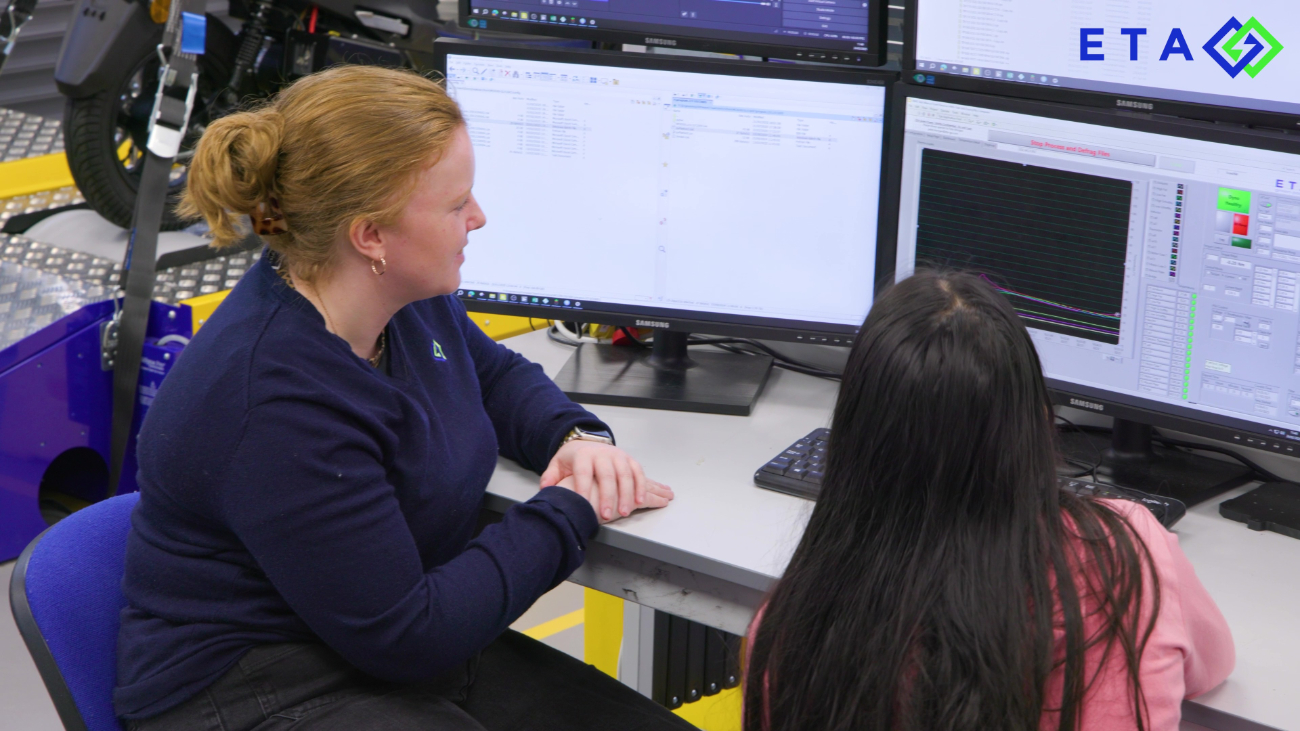
A note from Maryam Mousavimoayed, Lead Test Engineer at ETA Green Power
With more than twenty years in safety-critical engineering, including satellite systems, launch vehicles, and electric drive systems, I have frequently observed a common problem: unverified assumptions leading to increased costs, schedule delays, and rework late in the process.
Across both aerospace and electrification programmes, verification and validation (V&V) is not a downstream activity. It is a core systems engineering discipline that must shape requirements, architecture, and design decisions from the outset.
This article applies proven verification practices from safety-critical programmes to electrification challenges, focusing on requirements-led verification, disciplined test strategy, and enabling a predictable transition from prototype to production.
— Maryam Mousavimoayed
Lead Test Engineer, ETA Green Power
Early Verification Strategy: Why Testing in Product Development Must Start at Requirements
In most engineering organisations, verification sits at the end of the development timeline—a test campaign launched once the design is “mostly complete.” Testing becomes a discrete phase rather than a continuous discipline, shaping decisions from the start.
In electrification programmes, where schedules compress, requirements evolve rapidly, and pressure to show progress never relents, this approach proves especially tempting. Teams push integration and build forward, expecting verification to confirm the design once hardware reaches the bench.
Late verification, however, rarely confirms. It reveals.
When testing reveals instead of confirms
When integrated testing finally occurs late in the programme, it uncovers more than isolated defects. It exposes unexamined assumptions: ambiguous requirements, lingering open interfaces, paper-only performance margins, and failure modes invisible in earlier data. By then, architecture, suppliers, tooling, software structure, and targets are locked. Change becomes expensive, and the programme pays through redesign, delays, or accepted compromises in efficiency, reliability, or cost.
The true failure point in complex electrified products is rarely the first broken part—it’s the first unverified assumption revealed too late.
What is a verification strategy?
Verification differs from testing. Verification proves requirements are met; testing is one tool among several. Depending on phase and risk, verification can include:
- Analysis and calculation
- Simulation and model-based evidence
- Inspection
- Demonstration
- Instrumented testing
The goal is not to test everything earlier, but to select appropriate verification methods from the start and design the system for feasible proof.
From my experience in highly regulated and safety-critical programmes—including satellite and launch system verification—a core principle emerges: verification begins at requirements capture, not when test hardware is ready.
Designing requirements for successful verification
If a requirement cannot be verified, it remains incomplete. Strong requirements are:
- Quantified: Specific efficiency under defined conditions, not “high efficiency”
- Bounded: Clear operating envelopes for temperature, voltage, load, duty cycle
- Unambiguous: Defined sensors, tolerances, sampling rates, and duration
- Traceable: Clear rationale and proof method
Structured planning through DVP&R (Design Verification Plan & Report) or equivalent verification matrices creates the link: Requirement → method → procedure → evidence → decision. This traceability turns decisions from optimism to evidence-based certainty.
Building observability into product design
Late verification pain often traces to poor observability. Without access to critical measurements, teams struggle to prove performance, diagnose issues, or trust margins.
Early design must include:
- Instrumentation for current, voltage, speed, torque, temperature
- Logging of key signals and states at appropriate rates
- Safe fault-injection capability (sensor failures, communications loss, thermal and voltage stress)
- Clear diagnostic reporting that distinguishes cause from symptom
In electric drive systems, interactions dominate: thermal effects alter electrical behaviour, control choices influence losses, loads drive heating, and sensor noise affects stability. Observability turns testing from ambiguous and slow into rapid, iterative learning.
Simulation as early verification evidence and how to trust it
Simulation—motor maps, thermal models, inverter losses, control dynamics—provides early guidance on architecture, sizing, and margins. But simulation is trustworthy only when validated.
Practical steps:
- Use simulation to inform early decisions
- Specify which model aspects require test validation and at what fidelity
- Correlate models against real data as soon as prototypes allow
- Track correlation accuracy and document assumptions
This prevents the trap of treating simulation as a substitute for verification rather than as a contributor to the verification strategy.
Verification, validation, and qualification: critical distinctions
- Verification: Did we build it right? (meets specifications)
- Validation: Did we build the right thing? (meets user needs in operational context)
- Qualification: Sufficient evidence for production release and field robustness?
Electrification programmes suffer when qualification is left as a late phase. Qualification accumulates evidence progressively: performance, durability, thermal tolerance, robustness to variation, and stable control across conditions. Early planning sequences verification to build confidence incrementally; late planning often forces redesign or rework.
Reliability growth through early failure discovery
Reliability grows from early failure discovery, controlled stress expansion, clear failure criteria, and tight feedback loops—not from a final test campaign. Early verification makes failures informative, turning testing into structured learning rather than a high-stakes gate.
Verification strategy at ETA Green Power
At ETA Green Power, these disciplines support the development of high-density electric motors and controllers for demanding applications.
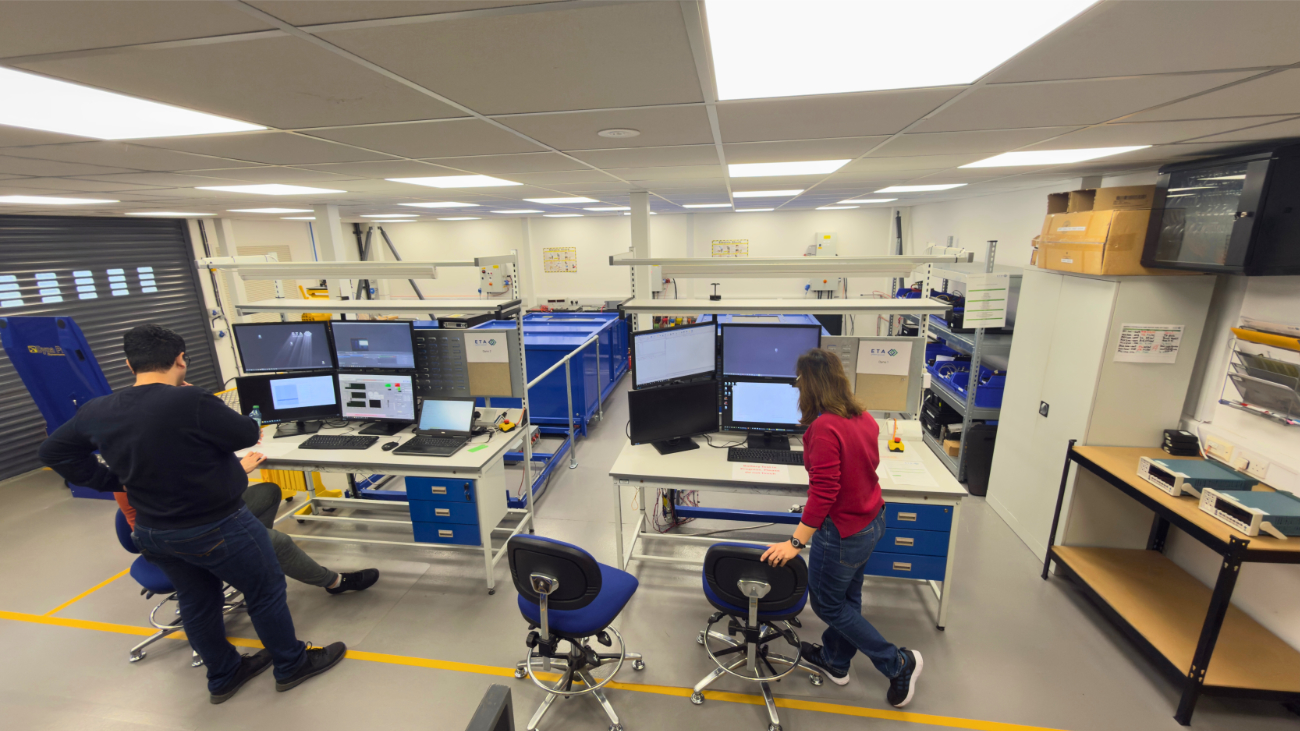
Early verification strategy—before hardware freezes—guides architecture, sensing, control, and thermal decisions. It defines proof pathways: suitable dynamometer setups, realistic load and duty profiles, high-resolution data logging for insight, not just pass or fail.
Integrated early, test environments become optimisation tools, accelerating learning, reducing redesign risk, and enabling reliable scaling while preserving performance, durability, and quality toward production.
Bridging development and manufacturing verification
Development success does not guarantee production readiness. Manufacturing variation—tolerances, assembly, sensor placement, wiring—demands early consideration:
• End-of-line verifiability of critical parameters
• Rapid diagnostics for fault isolation
• Minimal fragile calibration requirements
• Transferable evidence from development to production controls
Early verification bridges development and manufacturing, minimising escapes, speeding ramp-up, and controlling quality costs.
Verification as a strategic investment
Leaders decide whether verification is a cost or a value.
Treated as a phase, it loses to schedule pressure—until paid for later. Embraced as a strategy, it embeds clarity:
• How requirements will be proven
• Early observability and data investment
• Phase-appropriate verification methods
• Evidence-driven interface closure and change control
• Progressive qualification evidence accumulation
This does not remove risk; it makes risk visible and manageable early.
In complex electrified products, the true failure point is rarely the first broken part—it is the first unverified assumption revealed too late.
The test is essential, but not the whole of verification. Verification is not a phase. It is how engineering retains control.
Frequently asked questions about product verification
What is the difference between verification, validation, and qualification?
Verification confirms you built the product correctly and it meets specifications. Validation confirms you built the right product that meets user needs in real operating conditions. Qualification provides sufficient evidence for production release and demonstrates robustness in the field.
When should verification planning start in product development?
Verification planning must begin during requirements capture, not after design completion. Early planning defines how each requirement will be proven and ensures designs are testable from the start.
What is DVP&R in engineering?
DVP&R (Design Verification Plan & Report) establishes traceability from requirements through verification methods, test procedures, evidence collection, and acceptance decisions. It’s the framework that connects what you promise to how you prove it.
How does early verification reduce product development costs?
Early verification reveals design issues when changes are inexpensive, prevents late redesign cycles, reduces schedule risk, and enables evidence-based decisions throughout development rather than guesswork followed by expensive corrections.
What are the main verification methods available?
The five main verification methods are: analysis and calculation, simulation and modelling, inspection, demonstration, and instrumented testing. The best programmes use the appropriate mix based on risk, phase, and what each method proves effectively.
Get in Touch
Where in your current development cycle are you still depending on late testing to reveal what could—and should—be proven earlier? Contact ETA Green Power to discuss your solution.